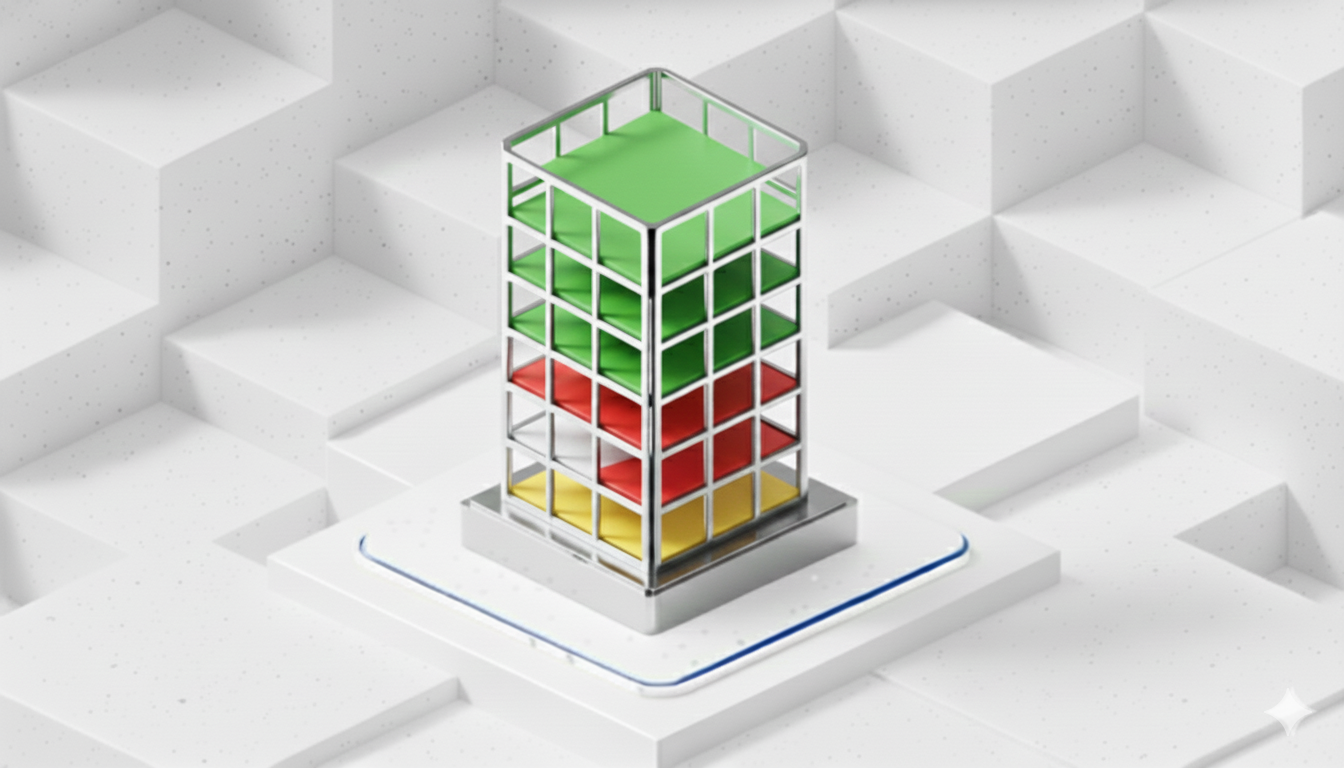
We check BIM models for errors, intersections, and inconsistencies before going to the construction site.
Collisions are intersections, errors, and conflicting decisions within a BIM model. If not identified promptly, they result in rework, downtime, and cost overruns during construction. We conduct automated and expert model verification to eliminate problems before work begins.
Why is collision checking necessary?
Saving time and money.
On complex projects, up to 40% of labor costs are spent on resolving design errors. Collisions caught in the model are significantly less expensive than those detected on-site.
Project constructability is guaranteed.
The model is verified across all sections: design, architecture, HVAC, water supply, electrical equipment, and process engineering.
Errors are identified early, preventing rework and delays.
Reducing construction risks.
Intersecting elements, incorrect distances, missing assembly zones—all of these are caught before work begins.
Increased transparency.
The client receives a precise picture of what will be built, how it fits together, and where potential problems lie.
Types of collisions we identify
Physical
Direct intersections of elements: pipes crossing beams, air ducts cutting into walls, etc.
Intelligent
Correct geometry, but incorrect logic: blocked door, unit inaccessible for maintenance, no technological distances.
Spatio-temporal (4D collisions)
Errors in the work schedule: it is impossible to assemble an element, there is no installation for equipment, the flows of workers are crossed, incorrect logistics.
Agreed/Inconsistent:
We distinguish between acceptable and unacceptable collisions. Only critical errors are sent for resolution.
How we detect collisions
We validate the model in professional software, using automated collision matrices and manual expert evaluation.
Importantly, we analyze not only edge intersections but also identify elements completely hidden within others , which standard tools miss.
What does the customer receive?
— A clean, error-free model.
— A clash matrix with priorities.
— Reports linked to model elements.
— Recommendations for corrections.
— The ability to integrate verification into 4D/5D.
— Reducing risks, work, and costs on the construction site.
How we work
-
Model analysis and selection of test areas
We determine which sections are involved: KR, AR, IOS, and the technological section. We create a matrix of elements, specifying levels of detail and tolerances.
-
Setting up search rules and scenarios
We set criteria: which intersections are considered critical, which are permitted, and which are considered assembly zones or temporary structures.
-
Automated collision detection
We conduct model checking: physical, logical, and temporal intersections. We catch errors that are impossible to spot manually.
-
Expert filtering and classification
We discard the "false" errors, identify critical ones, and group them into sections. We create a comment for each collision.
-
Generating reports and issuing comments
We prepare reports in convenient formats: PDF, Excel, BCF, and CDE export. We forward comments to the designers.
-
Re-checking until a clean model is achieved
After making corrections, we perform a re-check, verify the version, and confirm that all discrepancies have been resolved.